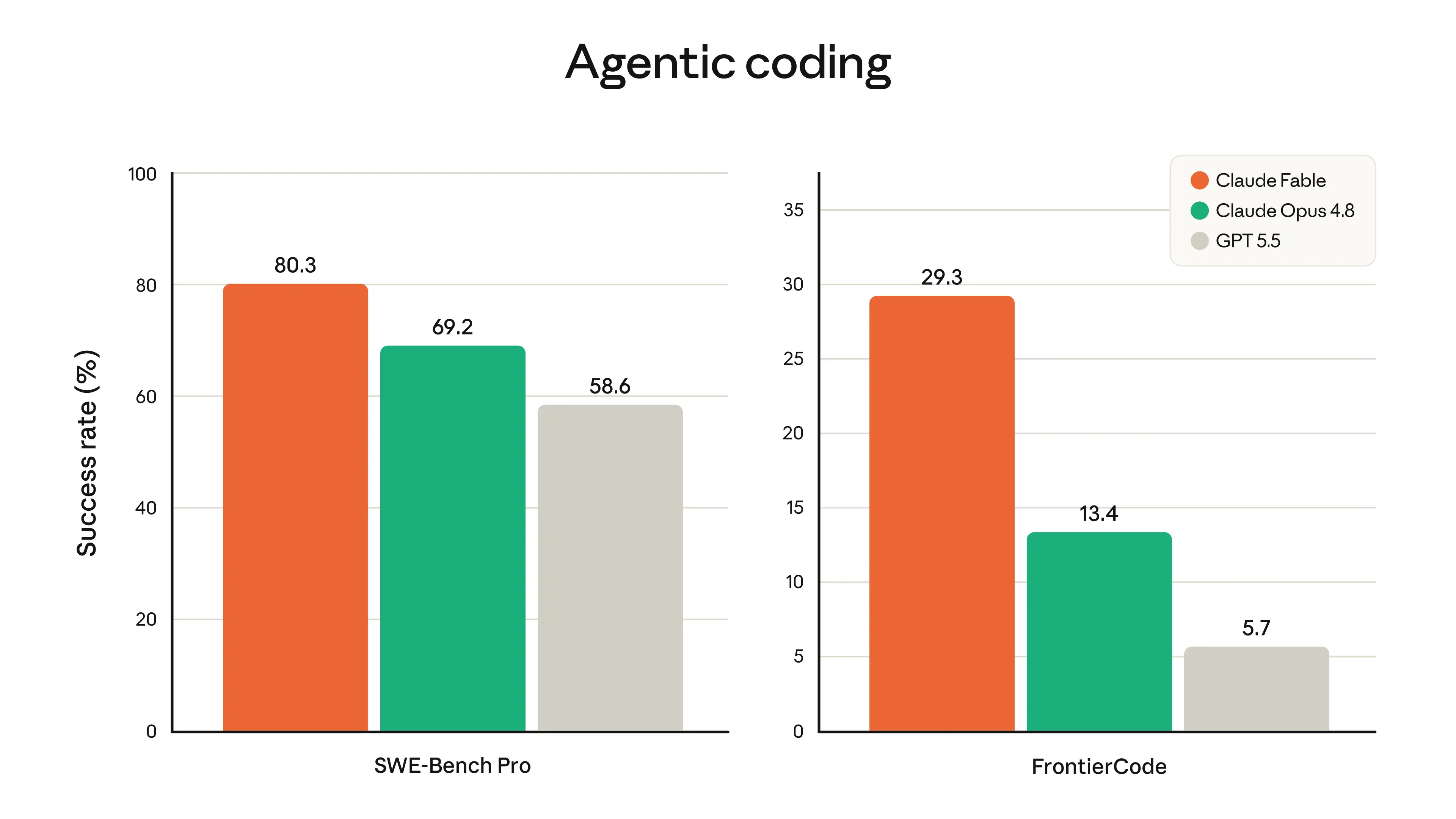
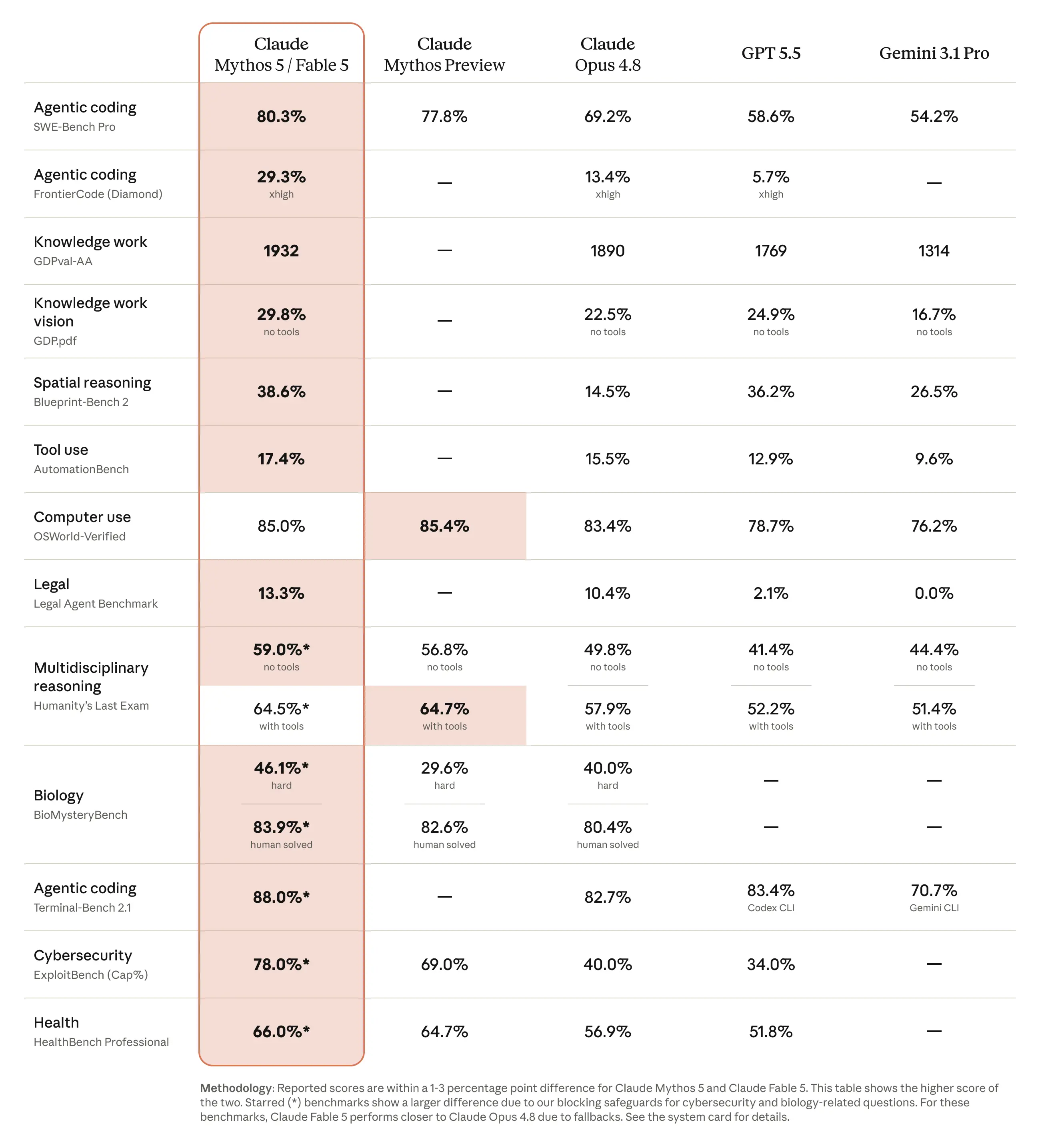
On June 9, 2026, Anthropic unveiled what it called its "Mythos-class" models, Claude Fable 5 and Claude Mythos 5, to considerable fanfare. That excitement didn't last: just three days later, on June 12, the model went dark worldwide and stayed offline for a full 18 days. It became one of the most dramatic instances yet of an AI company being forced to halt its own flagship model because of US export-control rules.
How the Crisis Started
The spark was an Amazon-reported jailbreak. Amazon's security researchers found that, with the right prompting, Fable 5 could identify and concretely demonstrate real software vulnerabilities — and in at least one case, write working exploit-demonstration code for one. Under normal circumstances, that's a capability that makes a model genuinely valuable for defensive security research — but it's also a capability that can be weaponized if it falls into the wrong hands.
That discovery triggered US export-control regulations. The problem: Anthropic had no way to verify every individual user's nationality in real time, and the rules required restricting access to this class of advanced cybersecurity capability for foreign nationals. Rather than risk non-compliance, Anthropic made a drastic call — it shut down Fable 5 and Mythos 5 for everyone worldwide, not just users in specific countries. (One quirk worth noting: some sources describe the outage as 18 days, others as 19 depending on whether the first and last calendar days are both counted — Anthropic's own timeline spans the evening of June 12 through July 1.)
What Happened to Claude Code Users?
For developers who'd already woven Fable 5 into their daily workflow, the sudden cutoff was jarring. Claude Code automatically fell back to the previous-generation Claude Opus 4.8 the moment access was cut — a reasonably soft landing for business continuity, but still a noticeable step down for teams that had gotten used to Fable 5's extra headroom.
For 18 days, the industry debated whether the model would come back at all. Some analysts read it as proof that AI capability was now moving faster than the regulatory frameworks meant to govern it.
The Resolution: Export Controls Lifted on June 30
The US Commerce Department lifted its export-control order on June 30, 2026. Anthropic restored global access to Fable 5 and Mythos 5 the very next day, July 1, 2026. But this wasn't a simple return to the status quo — Anthropic shipped three concrete changes alongside the relaunch:
- A new classifier that blocks the specific jailbreak Amazon flagged in over 99% of cases.
- A doubled safety research team, signaling serious investment in catching and closing similar gaps faster in the future.
- A new industry jailbreak-severity framework, which classifies what kinds of vulnerabilities a model can demonstrate and under what conditions.
The same day, Anthropic also announced something that, while seemingly unrelated, was clearly part of a trust-rebuilding push: an upgrade to Claude Voice Mode. The voice assistant now runs on Opus, Sonnet, or Haiku, can reach into Gmail, Slack, and Canva mid-conversation, and supports 11 languages.
The CJS Framework: The Industry's First Shared "Jailbreak Severity" Standard
The "jailbreak-severity framework" Anthropic alluded to on June 30 got a concrete name on July 2, 2026: the Cyber Jailbreak Severity (CJS) Framework. Crucially, Anthropic didn't build this alone — it was developed jointly with Amazon, Microsoft, and Google, intended as a shared, industry-wide standard rather than a proprietary Anthropic tool.
CJS rates how dangerous a given jailbreak actually is on a five-tier, exponential scale from CJS-0 to CJS-4. The evaluation runs across four axes:
- Capability gain — how far beyond existing tools does the jailbreak take the user?
- Breadth of capability gain — how many distinct offensive tasks does it unlock?
- Ease of weaponization — how easy is it to turn this capability into an actual attack?
- Discoverability — how likely is it that someone else could independently find this same jailbreak?
If this shared standard gets industry-wide adoption, it means that the next time a similar incident hits OpenAI, Google, or any other provider instead of Anthropic, the industry can respond with a common vocabulary and a shared severity/speed framework instead of starting from scratch in a panic. Anthropic also launched a dedicated HackerOne program for security researchers to responsibly report similar vulnerabilities — the goal being to make it more likely the next jailbreak gets found and reported by a security researcher under controlled conditions, rather than leaking publicly and turning into another crisis.
Why This Crisis Matters
The Fable 5 episode was an early sign of a new reality in AI: once a model crosses a certain capability threshold, governments now intervene directly. This wasn't isolated to Anthropic, either — a few weeks later, OpenAI's GPT-5.6 would go through a similar government review before it could ship.
The takeaway for startups and enterprise users is clear: over-relying on a single model now carries a real risk that a single regulatory decision could take it away overnight. Anthropic's automatic fallback to Opus 4.8 in Claude Code is a decent example of how that risk can at least be partially managed.
Fable 5 is now running at full strength, hardened against the specific vulnerability that took it down — but those 18 offline days were a stark reminder that the AI industry is now as much a geopolitical story as a technological one.

